Hope for Public Education, Duncan, Privatization, Elections,
Children As Products, ESSA, Testing
EXPERTS SPEAK
Can Schools Be Fixed? Experts on K-12 education offer their reasons for optimism and pessimism going forward.
This article has the wrong title.
Herein we get predictions from people who are "experts" in education (In this case, there are some people who have actually taught school and studied education, for a change). Some of their comments are thought provoking. Many of the writers claim that ESSA is a
reason to hope for improvements to public education. Diane Ravitch, on the other hand, ignores ESSA which will do little to help our children escape test-and-punish education which is now the norm in America (see
ESSA is a Lot of Suds, below). Instead she writes of the trust American's have with their own, local school systems. She says she is hopeful for two reasons...
The reasons for hope are two-fold: first, the public doesn’t want to abandon its community public schools. No district or state has ever voted to privatize its schools. Second, every so-called “reform” has failed to promote better education or equal opportunity for the neediest children. Neither charters nor vouchers consistently get better results for children, unless they exclude the weakest students. Measuring teachers by student test scores has been a costly failure. The great majority of the public admires their public schools and their teachers and wants them to be better, more equitably funded, not eliminated. If democracy works, these misguided “reforms” will be consigned to the ashcan of history.
But the focus of this article's title is
wrong. "Can Schools Be Fixed?" In their introduction the authors themselves explain why
there's more that must be fixed besides America's schools [emphasis added].
...Education is often touted as a means for boosting social mobility and making communities more equal, but inequality in school funding and resources has made that difficult to achieve, especially amid increasing poverty rates. Segregation in districts, both tacit and explicit, is holding scores of children back, and performance on math and reading assessments has remained relatively stagnant...
QUESTIONS FOR DUNCAN
Race To the Top Redux
Arne Duncan is gone and John King is the new
acting Secretary of Education. The damage done by Obama's Education Department remains, however. Mark Naison lists questions which need to be answered. [bullets added to improve readability]
When the full accounting of the Obama Administration's Race to The Top is made, the following questions will have to be answered
- How many schools were closed?
- How many great teachers were fired or forced into retirement?
- How many teachers still on the job were placed under a doctors care because test based accountability had destroyed their self-confidence
- How many communities experienced sharp declines in the number of teachers of color working in their schools?
- How many new charter schools were created which were embroiled in controversy because of financial irregularities or abusive practices?
SCRAPING
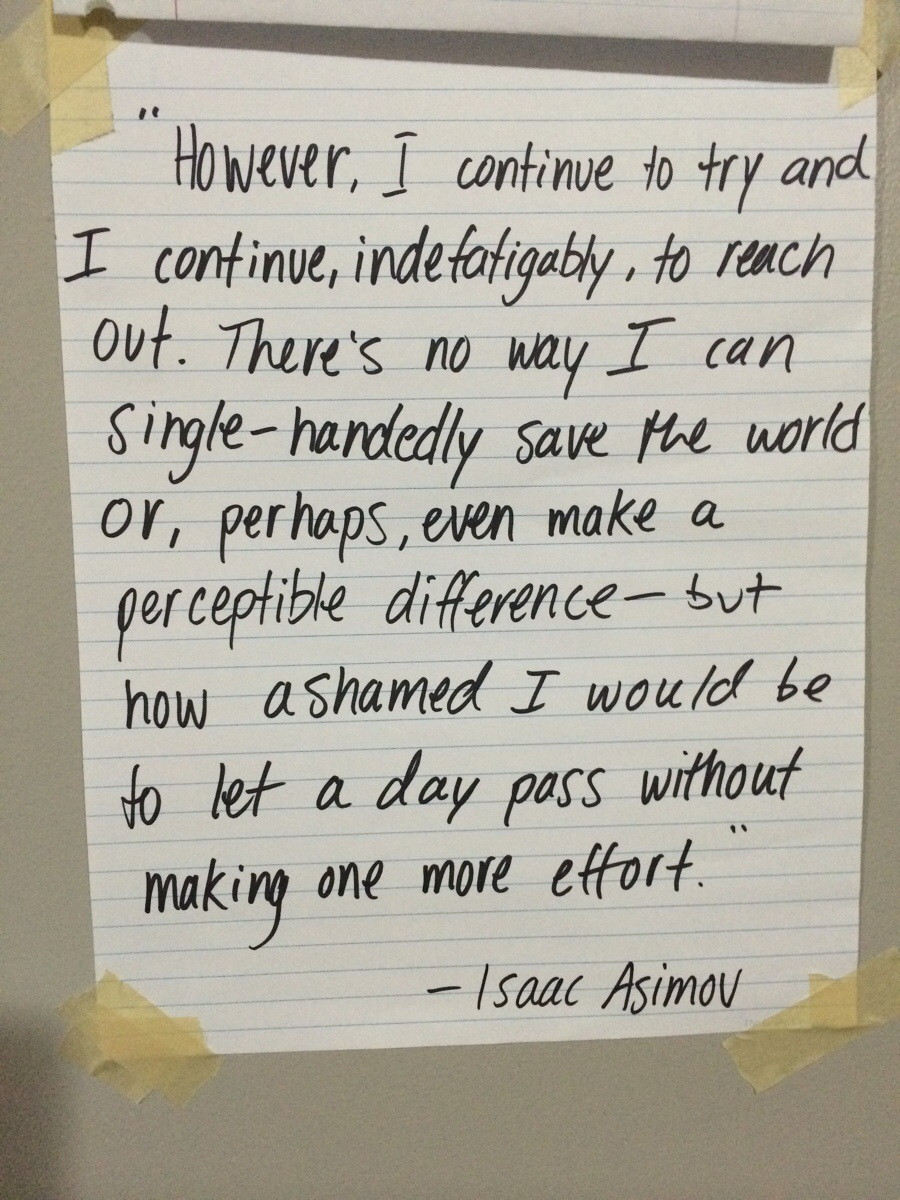
WEEKEND QUOTABLE
Mike Klonsky and his brother Fred are edu-bloggers from Chicago. The picture below is one done by
brother Fred and posted on
brother Mike's blog. It depicts Arne Duncan looking for his replacement, John King.
A PRIMER ON PRIVATIZATION
A primer on the damaging movement to privatize public schools
Marion Brady provides an excellent summary of the
test-blame-privatize movement. This is a
must-read for anyone who is interested in preserving public education.
Look at standardized tests from the kids’ perspective. Test items (a) measure recall of secondhand, standardized, delivered information, or (b) require a skill to be demonstrated, or (c) reward an ability to second-guess whoever wrote the test item. Because kids didn’t ask for the information, because the skill they’re being asked to demonstrate rarely has immediate practical use, and because they don’t give a tinker’s dam what the test-item writer thinks, they have zero emotional investment in what’s being tested.
As every real teacher knows, no emotional involvement means no real learning. Period. What makes standardized tests look like they work is learner emotion, but it’s emotion that doesn’t have anything to do with learning. The ovals get penciled in to avoid trouble, to please somebody, to get a grade, or to jump through a bureaucratic hoop to be eligible to jump through another bureaucratic hoop. When the pencil is laid down, what’s tested, having no perceived value, automatically erases from memory.

At last Bernie gives us a glimpse – but only a glimpse – of his K-12 education agenda. It's nice to know that he is against privatization through charters. Now, what about excessive testing, accountability based on test scores, vouchers, "turnaround schools," and the rest?
“I’m not in favor of privately run charter schools. If we are going to have a strong democracy and be competitive globally, we need the best educated people in the world. I believe in public education; I went to public schools my whole life, so I think rather than give tax breaks to billionaires, I think we invest in teachers and we invest in public education. I really do.” – Bernie Sanders (Quote begins at 1:48:32)
For a more detailed discussion see the following two entries in Anthony Cody's blog,
Living in Dialogue.
Cruz campaign official says Christians must take over public schools to stop ‘deception of the seed’
Elections matter. Voting matters [emphasis added].
Dunbar said nearly all American students attend public schools — which she warned were a secular plot to turn children away from Republican values.
“When we have 88 to 90 percent, which is approximately the number of the students that are being educated within our socialized education system, effectively indoctrinating our children with our own tax dollars, guess what?” she said. “We lose every other issue. We lose life, we lose marriage — we lose all of it. So I think this is the linchpin issue.”
CHILDREN ARE NOT PRODUCTS
My Daughter is Not a Widget
Here's a beautiful piece by Steven Singer (the gadflyonthewall) about why
Exxon-Mobile's CEO's view of America's children is misguided. Children are not products. Education is not a business. There's more to educating children than "college and career-ready standards."
I am but a simple man. I don’t bring in a six-figure salary. I’m a teacher in that same public school system. I’m also the father of an elementary student. I am a man of no monetary means and thus little merit. But I say this: the Tillersons of this world are wrong. Our children are worth more than these tiny bean counter brains realize. The purpose of education is not to provide more resources for their pointless game of Monopoly.
My daughter has a life, and her education is a tool to enrich that life. It is her vehicle of understanding the world around her. It is a process to invigorate her sense of wonder. It is a method of understanding how things work and where she fits in the universe.
Yes, she will one day need to seek employment. But what she chooses as her occupation will be up to her. SHE will decide where she fits in, Mr. Tillerson, not you. SHE will decide what is valuable in her life. SHE will decide if she wants to spend her hours in the pursuit of profits or less tangible enterprises.
As such, she needs literature – not standardized tests. She needs mysteries to solve – not Common Core. She needs equitable resources – not charter schools. She needs teachers with advanced degrees and dedication to their jobs – not Teach for America temps... [emphasis in original]

A lot has been written about the new education law, ESSA. Here are four point that must be remembered when thinking about the new law. In essence, the horrible parts of NCLB and RttT are not necessarily gone...they've just been handed over to the states to oversee. The overemphasis on testing is still there. The developmentally inappropriate standards are still there. The accountability (aka punishment) based on test scores is still there. The financial incentive for charters is still there. The last paragraph in the quote below is a call to action [emphasis added]!
— Testing: The issue of greatest public concern was too much standardized testing, which generated a parents’ rebellion. The administration said the onerous requirements should be relieved. So what got relieved? Well, nothing. The same grades still have the same tests. In addition, some states are developing “interim” assessments. Psychometricians are getting apoplexy trying to figure out how such Rube Goldberg contraptions can work. Tighter restrictions are placed on testing severely handicapped children and on those who do not speak English. The quadra-power may not be so mountain fresh.
— Standards: The Common Core State Standards were reviled on both the left and the right. So the new law contains tough, unequivocal “ultra deep” language prohibiting the U. S. secretary from forcing or even encouraging states to adopt the common core or any other particular set of state standards. Instead, states must still adopt federally approved “challenging,” state standards, at a “comparable” level.
— Accountability: Previously, schools had to meet ever-increasing goals for each year or be subject to state intervention. Whereas the new system requires the state to intervene in the lowest performing 5 percent, any high school that has a low graduation rate, and those schools that are not making sufficient progress in closing the achievement gap. In the old system, all schools faced sanctions if every student could not meet very high standards. In the new system, since every state has a lowest 5 percent, schools in high-scoring states will be subject to intervention no matter how high they score. (You may be having problems telling the difference between the 100- and the 92-ounce jugs).
— Federal spending: Here’s where the price increase slides in. Much was hurrahed about the increase in federal spending of $1.4 billion. That’s a nice piece of change until you consider that the nation currently spends about $650 billion per year on education — which makes the increase a touch over one-fifth of 1 percent. Not mentioned is that federal education spending was cut 20 percent over the past five years. We haven’t caught up with where we were before the recession. The new law also slips $333 million of the money to charter schools.
As weak and inadequate as this effort is, we can be pleased our federal government was able to act on something. We can also take some limited comfort in this token effort to address the needs of our economically deprived and children of color.
Unfortunately, the new suds look disappointingly like the old suds. But it isn’t the similarity of the old and new that is the problem — it is the mindless repetition and continuation of an utterly ineffective test-based reform system that must concern us.

Ok, so I'm beating a dead horse...the state has decided that student achievement testing should be used to evaluate teachers and schools, whether or not the practice is invalid. Not much that I say is going to change that (although I'll continue to write about this to Senator Kruse and Representative Cox, my local, running-in-the-election-unopposed, legislators).
Maybe, just maybe, however, if enough people hear this and raise the question often enough, the policy can be revisited.
ISTEP is an "ill-suited tool for measuring the performance of students, teachers, schools and school corporations." The problem is not that the testing process had some problems last year (although that surely is an issue to correct). The problem is that, as Linda Darling-Hammond has said, "We're using the wrong kinds of tests...We're using the tests in the wrong kinds of ways."
ISBA’s position speaks to the much larger problem with ISTEP+: It is an ill-suited tool for measuring performance of students, teachers, schools and school corporations. The push to do so comes from so-called school reform groups like Stand for Children and the pro-voucher Institute for Quality Education, both of which testified Wednesday in opposition to the accountability delay.
###
 Monte Irvin died Monday, January 11, 2016. He was 96.