"The whole people must take upon themselves the education of the whole people and be willing to bear the expenses of it. There should not be a district of one mile square, without a school in it, not founded by a charitable individual, but maintained at the public expense of the people themselves." -- John Adams

"No money shall be drawn from the treasury, for the benefit of any religious or theological institution." -- Indiana Constitution Article 1, Section 6.

"...no man shall be compelled to frequent or support any religious worship, place, or ministry whatsoever, nor shall be enforced, restrained, molested, or burthened in his body or goods, nor shall otherwise suffer on account of his religious opinions or belief; but that all men shall be free to profess, and by argument to maintain, their opinion in matters of religion, and that the same shall in no wise diminish enlarge, or affect their civil capacities." – Thomas Jefferson

Thursday, September 14, 2023

In Case You're Listening -- Annual Blogoversary Post


SEPTEMBER 14, 2006

I started this blog while I was still teaching, in 2006. I had just begun my 31st year as an educator.

Just like in previous years, however, I was stressed out and irritated about the standardized testing situation in Indiana. I needed to vent.

This was a place where I could express my frustration about the condition of public education in Indiana and the US. I didn’t care who read it…if anyone. I just wanted to put my thoughts down and complain. I suppose I should have titled the blog “The Complaint Department” or something like that since that’s what it mostly consisted (and consists) of...complaints about how public education, and education in general, is treated in the US.

I focused the blog on testing. 2006 was in the middle of the “No Child Left Behind” unpleasantness when schools were labeled good if they catered to wealthy, upper-middle, or middle-class students and bad if they were filled with children living in poverty. This is simply because, then as now, test scores mirror a family's economic status. Rich kids, with educated parents and well-staffed and well-supplied schools score high. Poor kids, with parents who work two or three minimum-wage jobs and understaffed and underfunded schools score low. Adding injury to insult, NCLB made punishment of the so-called bad schools part of the plan.

BAD TO WORSE

Things have gone from bad to worse in the last seventeen years. I’ve complained less, only because I’ve written less due to personal health problems (only 10 posts in 2022 and just one this year).

Testing is still misused and overused. The NAEP is regularly misinterpreted by folks who know nothing about education and testing and who conflate the terms “proficiency” and “grade level.” States still force schools to test for ranking purposes...in ignorance of the real purposes of educational testing.

Politicians, Indiana's included, still use every excuse to whine about the sad state of our public schools, how awful teachers (and their unions) are, and how our children are being shortchanged. All that public school bashing has led to a crisis of teacher shortages around the country. It turns out that it's hard to convince young people to enter a profession where they are insulted, their expertise questioned by people who don't know anything about education, underpaid, overworked, called names like "groomer," and blamed for all the ills of society.

Never mind that those same politicians are the main cause of most of the problems facing our public schools.

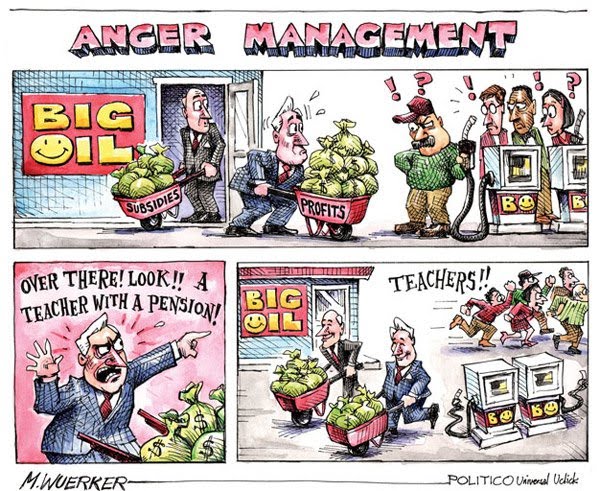
Never mind that the growth of vouchers and charters has sucked funding from real public schools.

Never mind that money is still inequitably spent so that the rich get richer and the poor still don't get enough.

Testing is still a problem. Teachers and schools are still judged by their test scores despite the fact that poverty is the real problem.

Vouchers and charter schools drain money from public schools at increasing rates despite the fact that their test scores also reflect the income of their students’ families.

Teachers are still undervalued and underpaid. My anecdotal reasons for this are 1) teaching is a predominantly female career and women don't get paid as well as men and 2) because we, as a nation, talk a good game but we really just don't give a damn about our children and their future.

It's almost like they (politicians, pundits, and privatizers) want to destroy public education...


MOVING FORWARD

I still regularly badger my local representatives about public education, but, being Republicans, they either are too afraid of their leadership to speak out in favor of public schools or, as I suspect is true, don’t really care about public schools. In their mind it’s “socialism” and we can’t have that, now, can we? I sometimes feel like they don't hear me either. My state representative is (or was, I can't recall) a board member for our local Lutheran schools (voucher recipients -- no conflict of interest there!), and my state senator is a doctor who introduced a bill (currently on hold pending litigation) forbidding parents from providing gender-affirming care for their children. So much for "parental rights."

Physically, I’m doing better so I’ll try to post more (I hope). And I’m not giving up. I’m hopeful that the young people of the nation take charge, insist that schools are fully funded, and insist that teachers are given the credit and pay they deserve.

With any luck, I’ll celebrate the successes of our nation’s support for public education over the next few years. In the meantime here are a couple of good posts to get your blood flowing...

Raising the Bar on Kindergartners: A Nation at Risk Lives On
Kindergarten has never been so high pressured, even after Covid, and it has been this way for years despite little proof children are born with evolved brains requiring faster instruction so they can grow up and beat their peers in other countries.

How must children feel while being made to carry the weight of the future economy, and if they don’t enter first grade learner ready, they could be marked for life!

And corporate remaking of kindergarten thus far, over forty years, with all its pressure, hasn’t produced a good enough child, or adult, for those who still worship A Nation at Risk.

Local Parents, Educators Face ‘Attack’ on Public Schools from Indiana Lawmakers - Limestone Post Magazine in Bloomington, Indiana
Republican legislators came to embrace the concept that state education funding should “follow the student.” If parents sent their child to a public school, a private school, or a privately operated charter school, that’s where the money would go.

This year, they expanded the private-school voucher program to families that make up to 400 percent of the limit for reduced-price school meals, $220,000 for a family of four; and they eliminated pathways that students had to follow to qualify. That makes it essentially a universal program, open to an estimated 97 percent of students.

“I’m excited to see Indiana once again stand behind our Hoosier families who want the ability to choose the best school that meets their child’s needs regardless of their zip code,” House Speaker Todd Huston, R-Fishers, said in a news release. “We’re now on our way to having the best school choice program in the country.”

As students leave public schools for private schools, however, state funding follows, leaving public schools with fewer resources. Instead of the “general and uniform system of common schools” prescribed by the state constitution, Indiana now funds three K-12 systems: traditional public schools; over 100 charter schools, most of them privately operated; and private schools that rely on vouchers.
🚌🚌🚌

Friday, August 25, 2023

2023 Medley #1 - Shortages, Textbooks and Names

Teacher Shortage, Free Textbooks,
Student Names
THE NATIONAL TEACHER SHORTAGE

NATIONAL: Our first two articles cover the national teacher shortage. How are schools coping? What are states doing to make it easier to become a teacher? Are those plans producing well-trained teachers?

Sadly, nowhere to be found is a discussion of why there is a national teacher shortage. Why are teachers leaving the profession in large numbers?
The result is that schools are struggling to find qualified educators...and states are coming up with ways to lower standards for teachers.

Teacher shortages have gotten worse. Here’s how schools are coping.
Evidence suggests that more teachers are leaving the profession. In the suburbs of Washington, many large suburban districts in Maryland and Virginia saw teacher turnover above pre-pandemic levels. An analysis of teacher retention data by the education news outlet Chalkbeat found that turnover rates were the highest they had been in at least five years in eight different states. Nguyen’s team, examining teacher turnover data from 34 states with the help of the National Center on Teacher Quality, found that it rose to a historic 14 percent during the 2021-2022 school year.

Nearly a quarter of teachers surveyed by the RAND Corporation in January said they planned to leave by the end of last school year, citing stress, low pay and long hours. The survey also showed that their well-being had improved from 2021 and 2022 levels.

Plagued by Teacher Shortages, Some States Turn to Fast-Track Credentialing
The American Federation of Teachers, the nation’s largest teachers union, in a 2022 report called for more rigor in teacher training, not less, criticizing state efforts to lower the qualifications needed to be a teacher.

“[T]here are more alternative and nontraditional ways to become a teacher in the U.S. than ever before, and unfortunately many of them are low quality,” the report said.

The teachers union stressed methods that are reflected in traditional training, saying aspiring teachers should get “extensive” classroom experiences “alongside a skilled practitioner over a significant period,” and “a strong foundation in subject-area content.”

“We cannot put a bandage on the teacher and school staff shortage by cutting corners and lowering the bar for entry,” the report said.

FREE TEXTBOOKS FOR INDIANA PARENTS

No more school textbook bills for Indiana parents — but what other fees can still be charged?

INDIANA: A well-thought-out piece of legislation should contain details and cover all situations. This one doesn't.

The law in Indiana now provides for school districts to cover textbook costs, something that parents used to pay for. This is a good idea, but the Republicans, in their stupidity lack of foresight, have neglected to fully fund the program so schools are scrambling to find money to cover books, supplies, and all the other things they need to continue to function.

Will the legislature fully fund public schools? Not likely considering that nearly everyone in the state is now eligible for a private school voucher...and the fact that at least one candidate for Governor has called for cutting Indiana's income tax.

Indiana hasn't been all that generous with tax dollars for public education, passing a huge increase for private school vouchers (72% increase) and a smaller, but large increase for charter schools (16% increase), while actual public schools were lucky enough to garner a 5% increase. Where will the state get the money to fund three school systems (only one of which -- the public schools -- is mandated in the state constitution) without an income tax?
While the new law was championed by state officials, school districts are left trying to figure out what they have to cover and what they don’t — especially when it comes to advanced classes and career development courses.

There’s no consensus yet for what types of fees are still being charged by individual Indiana schools and districts. Some contacted by the Indiana Capital Chronicle said they had totally eliminated all education-related fees — at least for the current school year.

Other district officials said they interpreted the new curriculum law differently and will continue to bill parents for certain college-level course materials and school management software...

The law itself is somewhat vague...

A CHILD BY ANY OTHER NAME...

Indiana law on student names and pronouns leaves tough decisions to families and schools

INDIANA: The law (as of July 1) now requires schools to get parental permission to address students by a name other than what appears on their birth certificate. Does this mean that Andrew can't be called Andy? Or Susan can't be called Susie? Sadly, the law is vague and schools are confused about what can and cannot be allowed.

The idea behind the law, according to Todd Rokita (Indiana Attorney General) is that parents have the right to be involved in the upbringing of their children. This law would prohibit a child from deciding on a name (or pronoun) that doesn't traditionally identify with their birth gender. It's all about parental rights...or perhaps it's about making it harder for trans kids to be recognized in the classroom.

The same group of legislators (the super-majority of Republicans) also voted to usurp parental rights by banning gender-affirming care for children under 18, even if parents want it.

Is the legislature interested in "fighting for the right of parents to handle the upbringing of their children," or are they interested in making life difficult for trans kids and their families? The answer is obvious.
HEA 1608 was one of several laws Indiana legislators passed this year aimed at restricting how and when transgender youth could transition socially and medically. Proponents say it gives parents more information about their children at school — part of an argument for increased parental oversight in education that has swept conservative states.

“We’re going to fight for the right of parents to handle the upbringing of their children,” said Indiana Attorney General Todd Rokita at a recent press conference in reference to such laws.

But opponents of the new law said outing transgender students to their parents could put some at risk of physical harm or homelessness if their families aren’t supportive. (The American Civil Liberties Union of Indiana challenged HEA 1608 in court by focusing on another aspect of the law that prohibits teaching human sexuality in grades K-3.)
🚌🚌🚌

Monday, August 22, 2022

2022 Medley #3 - A teacher shortage, or not?

A teacher shortage, or not?


NOT A TEACHER SHORTAGE

I've often posted teacher shortage rants on this blog, and I'll continue to do so, but the phrase needs some nuance. Peter Greene calls it...
...an exodus, a slow-motion strike, or a wave of teachers responding to the old, “If you don’t like it, then get out” with a resounding, “Okay, then.”
The point he makes is that there are enough teachers (at least for the time being) but the jobs in education are not attractive enough to get sufficient numbers of qualified people into classrooms. This is not new.

There Is No Teacher Shortage. So Why Is Everyone Talking About It?
...it’s a short step to solutions like those proposed in Idaho and other states that have simply lowered the bar so that no formal education training is required to take over a classroom...

All of these sorts of solutions rest on the premise that there is a teachers shortage, that the mine has been stripped of every nugget, that there is no crop to harvest and we must therefor change the definition of what we’re looking for. All of these solutions rest on a dogged determination to misdiagnose the problem.

...There is no teacher shortage. There’s a teacher recruitment and retention problem. There’s a “making the job attractive enough to draw in the people we want” problem. There is a problem that requires a careful, thoughtful diagnosis. There are policy and political leaders who see the current situation as an opportunity to be exploited rather than a problem to be solved. Those are not the voices we should be listening to right now.

WHERE WILL TOMORROW'S TEACHERS COME FROM?

Greene writes about the broken teacher pipeline in Pennsylvania. A similar situation exists in Indiana. Fewer students than in the past are going into education and fewer education students than in the past are actually entering the teaching profession. The situation is worse with college students of color. So if we're not in the midst of an actual teacher shortage, by the numbers, we will be soon.

In 1975, nearly 22% of the nation's college students studied education. By 2015 that number had dropped to less than 8%. The percentages for women, the majority of public educators, are even greater going from 32% in 1975 to less than 11% in 2015. And things haven't changed lately either.

Just 1 in 6 Indiana college students who study education become teachers, report finds
Only 1 in 6 students who pursued bachelor’s degrees in education at state colleges and universities ended up working as teachers, according to a new report on Indiana’s teacher pipeline that followed students who entered college from 2010 to 2012.

The outcomes were even starker among students of color: Just 5% of Black students who entered education programs went into teaching in Indiana classrooms, according to the study from the Institute of Education Sciences, the research arm of the U.S. Department of Education.

The report followed students enrolled in education programs at Indiana’s public colleges and universities to see how many received degrees, were licensed, and got jobs in teaching.

Of the roughly 11,000 students who pursued bachelor’s degrees in education, just 16% eventually received licenses and found jobs in Indiana public schools
Why are students avoiding going into education? Why are students with education degrees avoiding going into the classroom? The answer is the same as it's been for decades.

Money and respect, not necessarily in that order.


THE TEACHER PAY PENALTY

Everyone knows that teachers don't earn enough for the work that they do...everyone, that is, except right-wing pundits and legislators who consider the job "a parttime babysitting job."

"Teachers get the whole summer off and get paid for it."

"Teachers only work until 3 o'clock."

You get the picture. No amount of reasoning or facts will change their minds. To paraphrase Jonathan Swift,
You cannot reason people out of positions they didn’t reason themselves into.
To make matters worse, there is a significant gap between the salaries of teachers and the salaries of other professionals with similar education. This gap, which is continuing to grow, is referred to as the teacher pay penalty and it, too, has been around for quite a while.

Does the pay penalty exist because teaching is traditionally "women's work" and women in the US still, after all these years, make 72 cents for every dollar that men make? Absolutely.

Does the pay penalty continue to grow because Republican legislators in state houses in Indiana and around the county are transferring funding for public education to private and charter schools? Absolutely.

Does the pay penalty continue to grow because those same legislators hate teachers unions and are doing their best to "bust" the unions? Absolutely

The teacher pay penalty has hit a new high
Simply put, teachers are paid less (in weekly wages and total compensation) than their nonteacher college-educated counterparts, and the situation has worsened considerably over time.

Prior to the pandemic, the long-trending erosion in the relative wages and total compensation of teachers was already a serious concern. The financial penalty that teachers face discourages college students from entering the teaching profession and makes it difficult for school districts to keep current teachers in the classroom. Trends in teacher pay coupled with pandemic challenges may exacerbate annual shortages of regular and substitute teachers.

Providing teachers with compensation commensurate with that of other similarly educated professionals is not simply a matter of fairness but is necessary to improve educational outcomes and foster future economic stability of workers, their families, and communities across the U.S.
Are Republican legislators and their donors interested in improving education outcomes in order to foster future economic stability of workers, their families and communities?

Good question.


TO SOME, IT'S STILL A CALLING

Still, not every teacher is dissatisfied and leaving the profession. NEA, trying to post some good news for a change, posted this about teachers who were staying in their classrooms despite the difficulties.

Take this Job and Love It: Why Educators Stay
Kevin Adams has moments when he considers packing up his classroom and starting a new career...

...But then his thoughts go back to his students. He remembers what it’s like to watch them grow and evolve, to see the sparks of understanding light up their faces, to interact with their spirited young minds, and even to hear their silly jokes. There’s joy and fulfillment in each day at his middle school— enough of it to tip the scales. And so he stays.

“That is the number one reason I’m still here, hands down,” Adams says. “It’s the kids.”
🚌🚌🚌

Monday, August 1, 2022

Jim Trelease, 1941 – 2022

EVERY DAY SHOULD BE TEACHER APPRECIATION DAY

No.

Today is not Teacher Appreciation Day

Or Teacher Appreciation Week

Although, every day should be teacher appreciation day. It's likely that you wouldn't be reading this if not for teachers.

Teachers help the majority of American children learn how to read.

Someone taught the programmers of this blog application how to code and how to design and construct the device on which you're reading this post.

Someone taught your dentist how to check and repair teeth. Someone taught your veterinarian how to care for animals.

...and so on...

For me, the concept of teacher appreciation brings to mind the most memorable teachers from whom I've learned. One of my elementary school teachers stands out in my mind...several of my high school teachers...and several of my college teachers. My parents, too, as my first, and most important teachers, are important...most important (You parents should remember that you are your child's first, and most important teacher).

There is one person, however, who stands above all the other teachers I've had (aside from my parents) as the man who had the greatest impact on my career as an elementary school teacher...and made an important contribution to my parenting skills.

THE READ-ALOUD HANDBOOK

In 1979, when I was relatively new to teaching, I ordered a booklet from the Weekly Reader Book Club titled, "Jim Trelease's Read-Aloud Handbook for Parents and Teachers."

I had been reading aloud to my students since I started teaching. One of my education school professors had emphasized the importance of reading aloud to our classes, so, from my first class to my last, I tried to make time every day for read aloud. Looking back on my 35 year career I can remember only a handful of times I skipped reading aloud...whether I taught Kindergarten or sixth grade, or something in between, reading aloud was always the most important part of my reading program.

When I saw the pamphlet on reading aloud from the Weekly Reader Book Club I decided that it might be helpful. Thus began my relationship with Jim Trelease's books and research which lasted the more than four decades I spent in elementary school classrooms (as a teacher and volunteer).

I've written about Jim Trelease often on this blog. In 2008 I posted my congratulatory letter to him when he announced his retirement (and I reproduced his response in the comments). In 2017 I wrote a Teacher Appreciation post about him and his Read-Aloud Handbook, now in its eighth edition (the seventh edition is the last one edited by Trelease).


LESSONS FROM JIM TRELEASE

Some of the books listed in the Treasury of Read-Alouds which comprises the second half of the Read-Aloud Handbook might be outdated, but the information about the importance of reading aloud to children and the tips on how to read aloud are still valuable.

There are so many lessons to learn from his book (get a copy of the book!). Here are just two...

Lesson #1 (quoted from the Reading Research Quarterly. See #3, here)
...how exactly does a person become proficient at reading? It’s a simple, two- part formula:
  • The more you read, the better you get at it; the better you get at it, the more you like it; and the more you like it, the more you do it.
  • The more you read, the more you know; and the more you know, the smarter you grow.
Lesson #2 (emphasis added)
The single most important activity for building the knowledge required for eventual success in reading is reading aloud to children...It is a practice that should continue throughout the grades.
The second lesson was also quoted from another source. It came from Becoming a Nation of Readers published some years after the first Read-Aloud Handbook.

JIM TRELEASE, March 23, 1941 – July 28, 2022

Jim Trelease died on Thursday, July 28, 2022. I'm glad I was able to thank him for his help throughout the years I spent in classrooms. I can't imagine what my teaching career would have been like if not for his influence.

My collection of Read-Aloud Handbook editions,
several of which have been signed by the author, Jim Trelease.


📚📚📚